

Dust, damp and musty smells · Emergency calls until 11 PM
Indoor air quality services for homes and businesses
Our indoor air quality work deals with dust that's back a day after you clean, a house that feels damp at 74, and a smell when the system starts. We find out what's in the air and where it comes from before we recommend anything. The fix might be better filtration, humidity control, duct cleaning or a UV light, and you hear back within the hour when you call.
- Response
- Call back within the hour
- After hours
- Emergency calls until 11 PM
- Quotes
- In writing, before any work
- Based in
- Winter Garden, FL
Cloud 9 AC Services improves indoor air quality in homes and commercial buildings across West Orange County and South Lake: filtration, humidity control, duct cleaning and UV where it makes sense. It starts with what's in the air and where it comes from, and the fix matches the cause.
We're based in Winter Garden and work across West Orange County and South Lake. In Central Florida most air problems come down to humidity or filtration, and both show up in the signs below.
- Where
- Winter Garden, Ocoee, Oakland, Windermere, Horizon West, Clermont, Minneola, Apopka and the towns between
- For
- Homes, and buildings run by property managers, restaurants, retail, medical offices
- Equipment
- Filters & media cabinets, dehumidifiers, duct systems, UV lights, thermostats & humidity controls
When the cooling isn't the problem
Signs of poor indoor air quality
The thermostat can read 74 and the air can still feel wrong. These are the signs people usually notice first.
-
Dust is back a day after you clean.
The filter isn't catching it, or a return is pulling from the attic or a wall cavity. The fix is better filter media or a sealed return, and the visit tells us which.
-
It feels damp at 74.
The system is cooling faster than it's drying, which is common in Florida with an oversized unit. Turning the thermostat down only makes the house colder, so the fix is humidity control.
-
A musty smell when it starts.
It's usually growth on the coil or in the drain pan, blown into the rooms on every cycle. The fix is a coil cleaning, plus a UV light where it will keep the coil clean.
-
Allergies worse indoors than out.
Pollen and dust are getting into the house and staying there. The fix is filtration rated for it and changed on a schedule, with the ducts checked for what they're carrying.
-
Rooms that smell different from each other.
The air isn't moving the way the system was designed to move it. Usually it's a return that was never finished or a duct that has come apart in the attic.
-
A reason to want it cleaner than the minimum.
A newborn, someone with asthma or long days indoors are all good reasons. The right filtration, changed on schedule, does most of the work, and clean ducts do the rest.
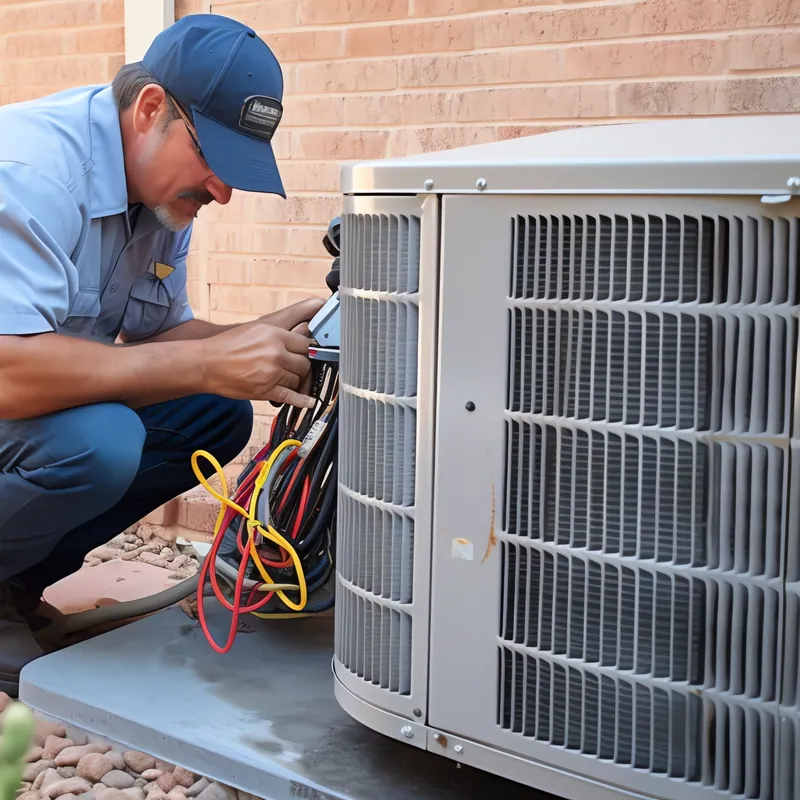
Find the cause, then fix that
How we improve indoor air quality
Air quality work starts with questions about what you're noticing. Equipment comes last, and only when the cause calls for it.
- Ask what you're noticing. We ask about the dust, damp, smells, allergies or the one room that feels different, and when and where you notice it. The pattern usually points at the cause.
- Measure the air. We measure humidity through the day, temperature room to room and airflow at the vents and returns. We also look at the filter and what it's catching.
- Check where the air comes from. We look for a return pulling from the attic or a wall cavity, open duct joints above the ceiling, and a coil or pan growing something. Most air quality problems start as a duct or a drain problem.
- Match the fix to the cause. Damp air needs a dehumidifier or a system that runs long enough to dry it. Dust and allergens need filtration rated for them and a sealed return. Smells need a coil cleaning, with UV where it keeps the coil clean, and ducts get sealed or cleaned when they're carrying something.
- Quoted in writing. Nothing you don't need. Each option comes with what it does and what it won't do. If a better filter and a sealed return solve it, that's the quote.
- Set up to stay that way. We write down the filter sizes and change dates, set the dehumidifier, and check it all again at the next maintenance visit.
Customers, patients and tenants
Indoor air quality for commercial buildings
HVAC for commercial buildingsIn a building, air quality usually shows up as a complaint first: a patient who notices a smell, a tenant who keeps calling about dust, or a dining room that feels damp by two o'clock. We measure first, then match the fix to the space: UV at the coil for any building, humidity control sized to a kitchen's load, ducts sealed where a tenant build-out left them open. How far filtration goes depends on the equipment and the scope of the job, and the quote says which.
- Access
- Ceiling and plenum work happens above the finished space, so we schedule it for when the rooms are empty.
- Hours
- We test during business hours, because that's when the problem shows up. The fix goes in after hours.
- Tenants
- We log the complaint, explain the fix in writing, and take a follow-up measurement to show it worked.
Air that stays fixed
Keeping the air clean with a maintenance plan
Filters fill up, drains grow things and a dehumidifier needs its own check. Most air-quality fixes last only as long as the maintenance behind them, so the follow-up goes on the same calendar as the tune-up.
-
The filter, checked every visit.
We change it every visit on a commercial system, and at home whenever you leave one out for us. Between visits, changing the filter is the one part of the job that's yours.
-
The coil rinsed, the drain kept clear.
The coil and the drain pan are where most smells and moisture start. The indoor coil gets a self-rinsing clean every visit, and the pan gets tablets to keep the line clear.
-
A deep clean when it's due.
When a coil needs more than a rinse, a full coil clean or a chemical condenser cleaning is quoted before anyone starts.
What people say after we leave
Google reviews from our customers
4.8on Google · 57 reviews
Read all the reviewsDue to issues I’ve had with previous AC services I took the advice of other locals in my area and used Cloud 9. They now do my bi-annual maintenance and all my repairs.
Christine G.Google · 2024
When another company told us we needed $5k worth of repairs, I reached out to friends for a recommendation for a second opinion and found Mike with Cloud 9. He responded immediately, and quoted us less than $700.
Courtney A.Google · 2024
Cody was my technician and was great. He was able to fix the AC in about 20 minutes when another company said the only option was to replace it.
Tony C.Google · 2024
Questions
Indoor air quality questions and answers
Here's what people ask us about the air in a house or a building, from the right humidity level to whether duct cleaning is worth it.
What should the humidity be inside my house?
Indoor humidity should sit between 45 and 55 percent. Above 60 the house feels clammy at 74, towels never dry and mold gets what it needs to grow. Below 40 is rare here outside a cold snap. A properly sized, properly charged system holds the range on its own for most of the year. The trouble comes in spring and fall, when the air is wet but not hot and the system doesn't run long enough to dry it. That's when a whole-house dehumidifier earns its place.
Why does my AC smell musty when it starts?
Something is growing on the wet parts: the evaporator coil, the drain pan, or the inside of the duct just after the air handler. The first blast of air when the system starts carries it into the room, then it fades as the coil cools. It gets worse in spring and fall, when the system runs in short bursts. The fix is cleaning the coil and the pan, clearing the drain and keeping them that way; a UV lamp at the coil stops it coming back.
What filter should I use?
Use the best filter your system can breathe through. Filters are rated by MERV: 8 catches dust and pollen, and 11 to 13 catches the fine particles that matter for allergies. The catch is that a denser filter also restricts airflow. A dense one-inch filter in a slot designed for a cheap one starves the coil of air and costs you cooling. A thick media filter in its own cabinet gives you the high rating without the restriction. Which one fits depends on your system, and we measure the airflow to find out.
Is duct cleaning worth it?
Sometimes it is, but less often than it's sold. It's worth doing after construction or a renovation, after a pest problem, when there's visible growth inside the ducts, or when you can see dust blowing from a register. On a clean, sealed system it does little, because the filter is already doing that job. What's usually worth more is finding out why the ducts got dirty, such as a return pulling from the attic, a joint open above the ceiling, or a filter that doesn't fit its slot. We check for those causes before we recommend a cleaning.
Do UV lights in an AC actually work?
A UV light works well at the coil. A UV lamp mounted over the evaporator coil keeps the surface from growing the film that causes the musty smell and the slow loss of airflow. It does very little for the air in your rooms, because the air passes the lamp too fast to be treated. So it's a good answer to a coil that keeps growing things, and a poor answer to dust or allergies, which are a filtration and sealing problem.
Ready when you are
Tell us what your system is doing and we'll tell you when we can be there.
The form takes about a minute to fill in. You hear back within the hour with a set time for the visit, so you know when to expect us.
- Mon–Fri8 AM–5 PM
- Sat–SunCall for availability
- Emergency calls answered until 11 PM
- ResponseCall back within the hour